SEP 28, 2026
There comes a moment when the noise of life feels unbearable — when closets groan with clothes we don’t wear, when screens consume hours we can’t account for, when silence itself feels alien. We know the mantras: buy less, scroll less, slow down. But knowledge rarely translates into rhythm. The Digital Ashram was imagined as a space where these ideals are not abstract but practiced — where ancient patterns of simplicity meet the chaos of modern life.
The word ashram comes from the Sanskrit śrama: effort or discipline. Not the striving of ambition, but the discipline of living lightly. Traditional ashrams were sanctuaries of rhythm — food grown slowly and shared communally, garments hand-spun and repaired, possessions stretched across lifetimes. None of this was branded “sustainable.” It was simply ordinary. And in its ordinariness lay clarity: how to live without excess, how to recognise enough.
Today, detox has been commodified into performance. “Wellness” is sold in plastic bottles. Minimalism is packaged as lifestyle branding. Even digital breaks become Instagram announcements. The contradiction leaves us more restless than before. The Digital Ashram bridges that gap: borrowing from places like Vinyasa Earth, where phones are set aside and daily life slows to the pace of breath, soil, and silence, and translating that ethos into accessible, repeatable rituals.
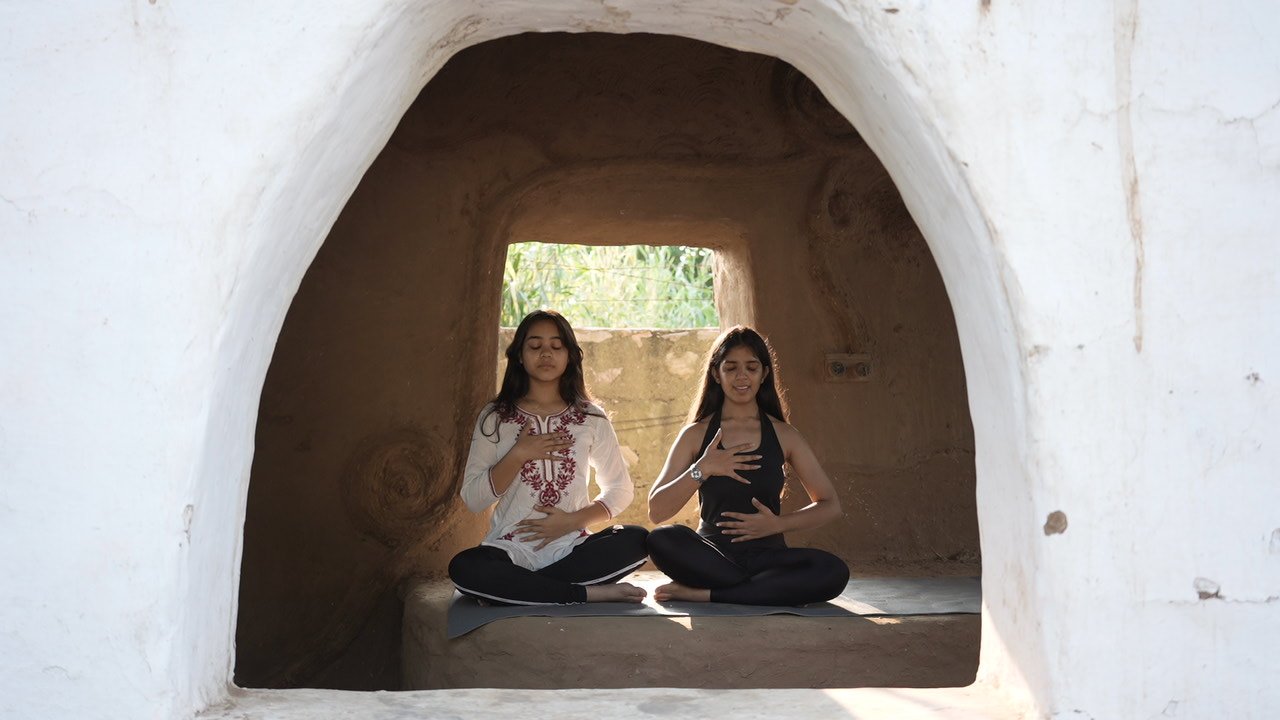
Inside, calm is not just prescribed but embodied. Short films capture fragments of unhurried living — oil massaged into tired feet, a clay bowl shaped patiently at the wheel, people eating without words under shifting light. These aren’t styled performances. They are reminders that stillness is a practice. Alongside them, explainers unpack the science behind tradition: why silence restores the nervous system, why slow chewing sharpens attention, why grounding rituals anchor identity in a culture of drift.
To move beyond observation, the Digital Ashram hosts a 7-Day Challenge: a sequence of small but cumulative acts. One day, you release a garment that no longer serves. Another, you place your phone out of reach while you fold clothes. By week’s end, silence, journaling, and decluttering have built into a rhythm you can sustain. It is not detox as spectacle, but detox as discipline — gentle, repeatable, and human.
At its core, the Digital Ashram is not an escape but a return. A return to balance, to presence, to a way of consuming that does not exhaust us. It reframes “enough” not as scarcity but as sufficiency — not a product, not a performance, but a moment we can inhabit.